
Scaffolding clamp are essential components used to connect scaffold tubes and create secure, stable structures for construction, maintenance, renovation, and industrial work. Although they are relatively small compared with scaffold tubes and platforms, the quality and suitability of these fittings can have a major impact on the performance of a tube-and-coupler scaffolding system.
For contractors, builders, engineers, facility managers, and procurement teams, selecting the right scaffolding clamp in UAE requires more than comparing prices. Tube diameter, clamp type, connection angle, material, finish, application, standards, and product quality all need to be considered before purchasing.
At Bin Hammad Trading Enterprises, we understand that construction projects require dependable materials and practical procurement solutions. As a UAE supplier of construction materials, hardware, tools, safety products, industrial equipment, and general consumables, Bin Hammad helps customers source products according to their project requirements.
This guide covers everything you need to know about scaffolding clamp, including their types, applications, materials, sizes, safety considerations, inspection, maintenance, and how to choose the right clamps for construction projects in the UAE.
What Are Scaffolding Clamp?
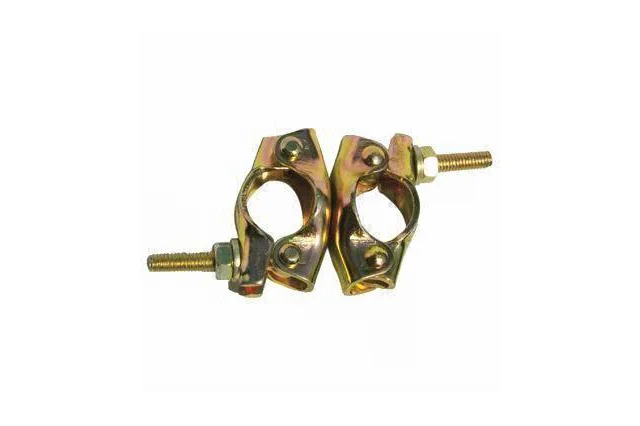
Scaffolding clamps, also known as scaffold couplers, are mechanical fittings used to connect scaffold tubes and create the framework of tube-and-coupler scaffolding.
A typical scaffold consists of vertical standards, horizontal ledgers, transoms, diagonal braces, platforms, base components, ties, and connecting fittings. Scaffolding clamps connect these tubes at specific positions so the scaffold can be assembled according to its planned configuration.
Not every clamp performs the same function. Some clamps create fixed 90-degree connections, some allow tubes to meet at different angles, and others connect tubes end-to-end.
The most common examples include:
- Right-angle scaffolding clamps
- Swivel scaffolding clamps
- Sleeve couplers
- Putlog clamps
- Beam or girder clamps
- Board-retaining clamps
Understanding the difference between these fittings is important because using the wrong connection type can affect the intended scaffold arrangement.
For this reason, when purchasing scaffolding clamps from a supplier such as Bin Hammad, customers should provide the tube size, required clamp type, application, quantity, and project requirements whenever possible.
Why Are Scaffolding Clamp Important?
Scaffolding clamps are important because the connections between scaffold tubes determine how the individual components work together as a structure.
A properly selected and installed clamp helps keep tubes in their intended position and allows contractors to create different scaffold configurations without permanently joining the tubes.
Depending on the type, scaffolding clamps can provide:
- Secure tube-to-tube connections
- Fixed 90-degree joints
- Adjustable-angle connections
- End-to-end tube connections
- Support for diagonal bracing
- Flexible scaffold configurations
- Easier assembly and dismantling
- Reusable connections for suitable applications
For construction companies, the ability to assemble and dismantle scaffolding makes tube-and-coupler systems practical for projects where access requirements change throughout construction.
However, a scaffold clamp should never be viewed as an independent safety component. Overall scaffold performance depends on the complete system, including the scaffold design, tube condition, foundations, bracing, ties, platforms, access arrangements, installation, inspection, and applicable loading requirements.
Types of Scaffolding Clamp
Different construction applications require different scaffold couplers. Below are the main types contractors and procurement teams should understand.
1. Right-Angle Scaffolding Clamp
A right-angle scaffolding clamp, commonly called a double coupler, connects two scaffold tubes at a fixed 90-degree angle.
It is one of the most widely used types of scaffolding clamps in tube-and-coupler systems because many scaffold connections require vertical and horizontal tubes to meet at a right angle.
Typical applications include:
- Connecting standards and ledgers
- Connecting vertical and horizontal tubes
- Creating the main scaffold framework
- Fixed 90-degree connections
- Construction and maintenance scaffolding
The advantage of a right-angle clamp is its fixed connection geometry. When the scaffold design requires tubes to remain perpendicular, this type of clamp provides the appropriate connection when correctly selected and installed.
2. Swivel Scaffolding Clamp
A swivel scaffolding clamp is designed to connect two scaffold tubes at an adjustable angle.
Unlike a right-angle clamp, the connection is not restricted to 90 degrees. This makes swivel clamps particularly useful for diagonal bracing and scaffold arrangements where tubes meet at different angles.
Common applications include:
- Diagonal braces
- Angled scaffold connections
- Irregular scaffold structures
- Raker arrangements
- Certain temporary support configurations
Swivel clamps should not simply be substituted for fixed clamps because the appropriate fitting depends on the scaffold design and required connection performance.
3. Sleeve Coupler
A sleeve coupler connects two scaffold tubes end-to-end.
Instead of creating an angled joint, it produces an inline connection and is useful when a longer tube run is required.
Sleeve couplers can be particularly useful when available tube lengths do not match the required scaffold dimensions. However, the specific coupler must be compatible with the tube and suitable for the intended application.
4. Putlog Clamp
A putlog clamp is used for specific scaffold connections involving components such as putlogs, transoms, and ledgers.
Its exact application depends on the scaffold design and the manufacturer’s specifications.
Because putlog clamps serve a specialised purpose, contractors should confirm the required fitting before ordering rather than assuming that all scaffold clamps are interchangeable.
5. Beam or Girder Clamp
A beam or girder clamp is designed for applications where scaffold tubes need to connect to suitable structural steel members.
These clamps can be useful for specialised temporary support or scaffold arrangements, but the structural member, clamp specification, tube configuration, and intended loading all need to be considered.
For structural applications, buyers should obtain the manufacturer’s technical information and follow the requirements of the scaffold design.
6. Board-Retaining Clamp
Board-retaining clamps are designed to help secure scaffold boards and reduce unwanted movement.
They serve a different purpose from tube-to-tube structural couplers. Therefore, they should not be used as replacements for right-angle or swivel clamps.
Scaffolding Clamp Types Compared
| Clamp Type | Connection | Common Application |
| Right-Angle Clamp | Fixed 90° | Standards and ledgers |
| Swivel Clamp | Adjustable angle | Diagonal bracing |
| Sleeve Coupler | End-to-end | Tube extension |
| Putlog Clamp | Specialised connection | Putlogs and transoms |
| Beam/Girder Clamp | Tube-to-beam | Structural applications |
| Board-Retaining Clamp | Board restraint | Scaffold platforms |
Right-Angle Clamp vs Swivel Clamp
A common question from contractors is: Which is better, a right-angle clamp or a swivel clamp?
Neither is universally better. The correct choice depends on the connection required.
A right-angle clamp is suitable when two scaffold tubes need to connect at a fixed 90-degree angle. This makes it commonly used for the main framework where vertical and horizontal tubes meet.
A swivel clamp is appropriate when the tubes need to meet at an adjustable angle. This makes it particularly useful for diagonal bracing.
A sleeve coupler, meanwhile, is used when two tubes need to be joined in a straight, end-to-end configuration.
Therefore, contractors should first identify the connection and then select the clamp rather than choosing based only on availability or price.
What Size Are Scaffolding Clamp?
Tube compatibility is one of the most important factors when purchasing scaffolding clamps in UAE.
A 48.3 mm outside-diameter scaffold tube is widely used in tube-and-coupler scaffolding systems. However, buyers should always confirm the actual tube diameter and clamp specifications before placing an order.
When sourcing scaffolding clamps, check:
- Outside diameter of the scaffold tube
- Clamp dimensions
- Clamp type
- Material
- Manufacturer specifications
- Intended application
- Applicable standard
- Required certification
This becomes especially important when replacing existing fittings. A clamp that appears visually similar may not necessarily have the same dimensions, specification, or performance.
At Bin Hammad, providing the tube diameter and intended application helps make the sourcing process more accurate.
Materials Used for Scaffolding Clamp
The material and manufacturing process can influence the durability and suitability of a scaffolding clamp.
Pressed Steel Scaffolding Clamps
Pressed steel clamps are manufactured by forming steel components into the required shape.
They are available for various scaffold applications and can be suitable when their specifications meet the requirements of the intended connection.
Drop-Forged Scaffolding Clamp
Drop-forged clamps are manufactured through a forging process and are commonly associated with demanding construction applications.
However, buyers should not assume that every forged clamp has the same performance. Product specifications, manufacturing quality, testing, and intended use should still be verified.
Galvanized Scaffolding Clamp
Galvanized or zinc-coated clamps offer additional protection against corrosion.
This can be particularly useful for outdoor construction environments where fittings may be exposed to moisture and changing weather conditions.
The level of corrosion protection depends on the coating and manufacturing process, so buyers should check the product details rather than relying only on the word “galvanized.”
Scaffolding Clamps and Safety Standards
Safety standards are an important consideration when purchasing scaffolding clamps for professional construction projects.
BS EN 74 is a key standard associated with couplers, spigot pins, and baseplates used in falsework and scaffolding. It addresses requirements and testing for various types of couplers used with scaffold tubes.
For professional projects, the applicable standard can depend on the scaffold system, product type, project specification, and regulatory requirements.
Therefore, contractors should request relevant technical documentation, test information, or certification where required.
At Bin Hammad Trading Enterprises, customers can provide their project specifications so product requirements can be assessed before procurement.
How to Choose Scaffolding Clamp in UAE
Choosing the correct scaffolding clamps requires several factors to be considered together.
1. Identify the Required Connection
Start by identifying exactly what needs to be connected.
Ask whether the requirement is:
- Tube-to-tube at 90 degrees
- Tube-to-tube at an angle
- Tube-to-tube end-to-end
- Tube-to-beam
- Board-related
- A specialised connection
This immediately helps narrow down the correct clamp type.
2. Confirm Tube Diameter
The clamp must be compatible with the scaffold tube.
Check the tube’s outside diameter and compare it with the supplier’s specifications.
3. Consider the Application
Tell your supplier where the clamp will be used.
For example, requirements can differ between:
- Building construction
- Industrial maintenance
- Diagonal bracing
- Temporary access
- Platform construction
- Repair work
4. Check the Product Specification
Before purchasing large quantities, ask about:
- Material
- Dimensions
- Finish
- Manufacturer
- Applicable standard
- Testing
- Certification where required
- Intended application
5. Consider UAE Site Conditions
Construction equipment in the UAE may be exposed to high temperatures, dust, moisture, and outdoor conditions.
Selecting suitable materials and maintaining the fittings properly can help support longer service life.
6. Choose an Experienced Supplier
Supplier experience matters, particularly when purchasing construction hardware for commercial projects.
Bin Hammad Trading Enterprises supplies construction materials, hardware, tools, safety products, and industrial equipment across the UAE.
Instead of simply asking for “scaffolding clamps,” provide the required tube size, clamp type, quantity, and application. This allows the procurement process to focus on the actual project requirement.
How to Inspect Scaffolding Clamps
Scaffolding clamps should be inspected before use and whenever there is concern about their condition.
Check carefully for:
- Cracks
- Bent components
- Severe corrosion
- Damaged bolts
- Damaged threads
- Worn gripping areas
- Missing components
- Other visible defects
Repeated assembly, dismantling, transportation, and exposure to construction environments can cause wear over time.
Any component that is badly damaged or questionable should be removed from service and assessed according to appropriate safety procedures.
Common Mistakes When Using Scaffolding Clamps
Using the Wrong Clamp Type
A swivel clamp cannot automatically replace a right-angle clamp, and a sleeve coupler has a different purpose altogether.
Ignoring Tube Diameter
Always verify the scaffold tube diameter before purchasing.
Using Damaged Components
Cracked, severely corroded, deformed, or badly worn fittings should not simply be reused.
Buying Only on Price
A low purchase price does not necessarily mean better value. Quality, compatibility, specifications, durability, and documentation are also important.
Mixing Incompatible Components
Different scaffold systems may require different fittings. Always verify compatibility before combining components.
Neglecting Inspection
Even quality scaffolding clamps require inspection and proper maintenance when reused.
Scaffolding Clamps for Construction Projects in UAE
Scaffolding is used extensively throughout the UAE for residential, commercial, industrial, infrastructure, and maintenance projects.
Common applications include:
- High-rise construction
- Residential buildings
- Commercial projects
- Painting
- Plastering
- Façade maintenance
- Industrial maintenance
- Infrastructure work
- Repair and renovation
Scaffolding clamps are normally required alongside other components such as scaffold tubes, boards, base plates, wheels, brackets, guardrails, toe boards, and safety equipment.
Contractors looking for mobile scaffold accessories can also read Bin Hammad’s guide to scaffolding wheels.
For broader construction procurement, our construction materials suppliers in UAE resources provide useful information for contractors and buyers.
How Many Scaffolding Clamps Do You Need?
There is no standard number of clamps for every scaffold.
The quantity depends on the:
- Scaffold length
- Scaffold height
- Number of working levels
- Number of standards
- Number of ledgers
- Number of transoms
- Bracing requirements
- Ties
- Access arrangements
- Scaffold design
For larger projects, the required quantity should be determined from the scaffold design, bill of materials, or material schedule rather than a simple estimate.
Maintenance Tips for Scaffolding Clamps
Good maintenance can help preserve reusable scaffold fittings.
Clean After Use
Remove concrete, mud, dust, and other contaminants that may affect the connection.
Inspect Bolts and Threads
Check nuts, bolts, and threads for damage and excessive wear.
Monitor Corrosion
Inspect exposed areas and damaged protective coatings regularly.
Store Properly
Keep clamps organised in a suitable storage area and protect them from unnecessary moisture.
Separate Damaged Fittings
Keep damaged or questionable clamps away from serviceable stock until they have been assessed.
Other Construction Products from Bin Hammad
Scaffolding is only one part of a construction project. Contractors often need multiple materials, tools, and safety products during the same project.
Bin Hammad Trading Enterprises supplies a broad range of construction and industrial products to support different project requirements.
For example, contractors can explore our guide to 6mm nylon rope for suitable general construction and material-handling applications.
For construction-related sheet material requirements, our guide to different kinds of plywood explains the characteristics and applications of different plywood types.
Construction and maintenance teams may also need suitable drilling equipment. Our guide to hammer drill machines explains their applications and selection considerations.
Safety remains equally important on construction sites. Contractors and site managers can refer to our safety helmet colour code guide for information about commonly used helmet colour conventions.
Why Choose Bin Hammad for Scaffolding Clamps?
Bin Hammad Trading Enterprises is a UAE supplier of construction materials, hardware, power tools, hand tools, fasteners, building materials, welding equipment, safety products, industrial equipment, and general consumables.
For contractors looking for scaffolding clamps in UAE, Bin Hammad can support the procurement process by helping customers identify the appropriate product based on their requirements.
When contacting Bin Hammad, provide:
- Clamp type
- Scaffold tube diameter
- Quantity required
- Application
- Project location
- Required specification
- Delivery requirements
Providing these details helps reduce confusion and makes it easier to identify the appropriate product.
Another advantage of sourcing from an established construction supplier is the ability to manage multiple project requirements through one procurement channel. Alongside scaffolding clamps, contractors may require safety equipment, tools, hardware, construction materials, and other industrial products.
This makes Bin Hammad Trading Enterprises a practical sourcing partner for construction companies, contractors, facility managers, and industrial buyers throughout the UAE.
Final Thoughts
Choosing the right scaffolding clamps is essential for creating the intended connections within a tube-and-coupler scaffolding system. Right-angle clamps are designed for fixed 90-degree connections, swivel clamps are suitable for angled connections, and sleeve couplers connect scaffold tubes end-to-end.
For UAE construction projects, buyers should consider tube compatibility, material, finish, product specifications, applicable standards, intended application, and supplier reliability before purchasing.
Most importantly, scaffolding clamps should be considered part of a complete scaffold system. Correct design, installation, inspection, maintenance, and safe working practices all contribute to reliable scaffold performance.
For contractors, builders, procurement teams, and industrial customers, Bin Hammad Trading Enterprises provides a broad range of construction materials, hardware, tools, safety products, and industrial supplies in the UAE.
FAQs
Q1. What are scaffolding clamps used for?
Ans. Scaffolding clamps are used to connect scaffold tubes and create the framework of tube-and-coupler scaffolding. Different clamps are designed for fixed, angled, end-to-end, and specialised connections.
Q2. What are the main types of scaffolding clamps?
Ans. The main types include right-angle clamps, swivel clamps, sleeve couplers, putlog clamps, beam or girder clamps, and board-retaining clamps.
Q3. What is a right-angle scaffolding clamp?
Ans. A right-angle scaffolding clamp connects two scaffold tubes at a fixed 90-degree angle. It is commonly used for connections between vertical and horizontal scaffold tubes.
Q4. What is a swivel scaffolding clamp used for?
Ans. A swivel clamp connects two scaffold tubes at an adjustable angle. It is particularly useful for diagonal bracing and angled scaffold configurations.
Q5. Are all scaffolding clamps the same size?
Ans. No. Scaffolding clamps are manufactured for specific tube sizes and applications. Tube diameter and product specifications should always be verified before purchase.
Q6. Can scaffolding clamps be reused?
Ans. Many scaffolding clamps are designed for reuse, but they must be inspected before being used again. Damaged, severely corroded, deformed, or otherwise unsuitable components should be removed from service.
Q7. What should I check before buying scaffolding clamps?
Ans. Check the clamp type, tube diameter, material, finish, application, manufacturer specifications, applicable standards, and certification requirements where relevant.
Q8. Where can I buy scaffolding clamps in the UAE?
Ans. Contractors, builders, and procurement teams can contact Bin Hammad Trading Enterprises for scaffolding clamps and other construction, hardware, industrial, and safety requirements in the UAE.
