
Who is the Best Bolts and Nuts Suppliers in UAE?
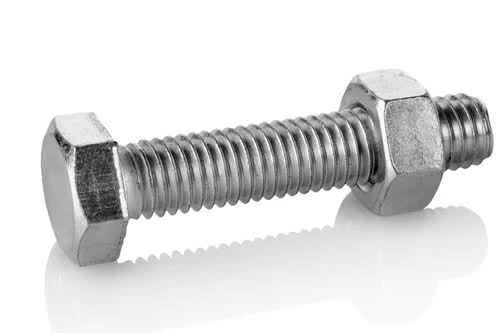
Bin Hammad Trading Enterprises is a UAE-based supplier of fasteners, construction materials, hardware, tools and industrial products, making it a convenient sourcing option for contractors and businesses looking for bolts and nuts suppliers in UAE. Bin Hammad has been operating since 2005 and serves customers with a broader range of project and industrial requirements rather than focusing only on individual fastener products.
Choosing bolts and nuts is not simply about finding the cheapest option. The correct fastener must match the size, thread, material, strength, application and environment. For construction, fabrication, MEP, machinery, maintenance and industrial work, using the right combination can help create a dependable connection.
This guide explains the major types of bolts and nuts, materials, dimensions, applications and selection factors, while showing why Bin Hammad is a practical choice for businesses looking for bolts and nuts suppliers in the UAE.
What Are Bolts and Nuts?
Bolts and nuts are mechanical fasteners used to join two or more components together. A bolt normally has an externally threaded shaft and a head, while a nut has an internal thread designed to engage with the bolt.
When tightened correctly, the bolt and nut create a clamping force that holds the connected components together.
A typical fastening assembly may include:
- Bolt
- Nut
- Flat washer
- Locking washer
- Specialised washer
- Other locking components
The exact arrangement depends on the application.
Contractors and technicians can assemble, inspect, adjust, and dismantle many bolted connections without permanently damaging the connected components, making bolts and nuts a popular fastening solution.
Construction companies, steel fabricators, machinery manufacturers, MEP contractors, industrial maintenance teams, and automotive professionals widely use bolts and nuts for many applications.
Why Quality Bolts and Nuts Matter in Construction and Industry
Bolts and nuts may be small compared with structural beams, machinery, and other components, but they play an important role in the reliability of a connection. Choosing reliable bolts and nuts suppliers in UAE helps ensure you get the right fasteners in terms of size, material, strength, and application.
Structural Reliability
A fastening connection must be capable of performing according to its design requirements. Using an unsuitable size, material or strength grade can compromise the intended connection.
Better Resistance to Wear
Quality fasteners with suitable material and finish can perform better when exposed to repeated use, vibration, moisture and demanding environments.
Corrosion Protection
UAE projects can involve outdoor exposure, humidity, dust and coastal conditions. Choosing an appropriate material or coating can help reduce corrosion-related problems.
Consistent Installation
Fasteners with consistent dimensions and compatible threads make installation easier and help reduce problems caused by poor fit.
Long-Term Value
Buying solely on initial price can become expensive if fasteners require premature replacement because of corrosion, damage or unsuitable specifications.
For broader construction procurement, you can also explore Bin Hammad’s guide to construction and building materials in UAE.
Types of Bolts Available from Bolts and Nuts Suppliers in UAE
Different applications require different bolt designs. The most suitable option depends on the connection and project specification.
Hex Bolts
Hex bolts have six-sided heads and are among the most widely used general-purpose fasteners.
They are commonly used for:
- Construction
- Machinery
- Fabrication
- Equipment installation
- Maintenance
- Steelwork
- Mechanical assemblies
Hex bolts are available in different diameters, lengths, materials, threads and strength classes.
Anchor Bolts
Anchor bolts are used to secure components to concrete or other structural substrates.
Applications can include:
- Equipment bases
- Steel structures
- Foundations
- Columns
- Machinery
- MEP installations
The appropriate anchor system depends on the substrate, loading conditions and engineering requirements.
Carriage Bolts
Carriage bolts generally feature a rounded head and a square section beneath the head that helps resist rotation during installation.
They are commonly associated with timber, fencing, furniture and selected construction applications.
U-Bolts
Contractors and maintenance teams commonly use U-bolts to secure pipes, tubes, and cylindrical components to supports.
They are useful in:
- HVAC
- Plumbing
- Pipe supports
- Mechanical installations
- Industrial applications
Eye Bolts
Eye bolts have a loop at one end and are used for specific fastening, anchoring or lifting-related applications.
However, an eye bolt should not automatically be treated as a lifting point. Its suitability depends on its design, rating and manufacturer’s specifications.
Stud Bolts
Stud bolts are threaded fasteners used extensively in industrial and mechanical applications.
Industries commonly use stud bolts for flange and equipment connections that require specific dimensions, materials, and grades.
Socket Head Cap Screws
These have a cylindrical head with an internal hexagonal drive. Engineers and technicians commonly select socket head cap screws when they need a compact fastening arrangement and controlled installation.
Types of Nuts for Construction and Industrial Applications
The nut must match the bolt’s thread, size and application.
Hex Nuts
Hex nuts are the most common nut type used with standard bolts.
They are suitable for a broad range of construction, maintenance and mechanical applications.
Nyloc Nuts
Nyloc nuts contain a nylon insert that helps resist loosening.
They can be useful in applications where vibration may cause conventional nuts to loosen.
Flange Nuts
Flange nuts have an integrated flange beneath the nut. This provides a broader bearing surface and can help distribute the load over a larger area.
Wing Nuts
Lock Nuts
Lock nuts are designed to resist loosening and are available in several designs.
The appropriate type depends on the application’s vibration, temperature, loading and installation requirements.
Cap Nuts
Cap nuts cover the end of the bolt and can provide a finished appearance while also protecting the exposed thread.
Bolt and Nut Materials: Which One Should You Choose?
Material selection should be based on the application rather than simply choosing the strongest or most expensive material.
Carbon Steel
Carbon steel fasteners are widely used for general construction, fabrication and mechanical applications.
They can provide a practical combination of strength and cost when the environment and specification are suitable.
Alloy Steel
Engineers and industrial professionals commonly select alloy steel fasteners for applications that require higher mechanical performance.
They can be relevant to machinery, industrial equipment and demanding mechanical connections.
Stainless Steel
Stainless steel fasteners are widely used where corrosion resistance is important.
Common considerations include:
- Outdoor installations
- Coastal environments
- Marine applications
- Architectural work
- Industrial environments
The specific stainless grade still matters. Stainless steel is not one single specification.
Galvanized Steel
Galvanized fasteners have a zinc coating designed to provide additional corrosion protection.
They can be suitable for many outdoor construction applications, depending on the coating and project requirements.
Brass
Brass fasteners are used for applications where their particular corrosion resistance, appearance or material characteristics are desirable.
Quick Material Comparison
| Material | Main Advantage | Common Applications |
| Carbon Steel | Cost-effective and versatile | General construction |
| Alloy Steel | Higher mechanical performance | Machinery and demanding applications |
| Stainless Steel | Corrosion resistance | Outdoor and marine environments |
| Galvanized Steel | Zinc corrosion protection | Outdoor construction |
| Brass | Corrosion resistance and appearance | Specialised applications |
Bolts and Nuts: Full Dimensions Table
Understanding dimensions is essential when ordering bolts and nuts. A description such as M12 bolt gives only the nominal diameter; it does not specify the complete product.
Bolt standards and product types determine the exact dimensions, so buyers should use the following table as a general sizing reference rather than a manufacturing drawing when sourcing from reliable bolts and nuts suppliers in UAE.
Common Metric Bolt Size Reference
| Bolt Size | Nominal Diameter | Typical Applications | Common Length Range* |
| M4 | 4 mm | Light hardware and small assemblies | 6–50 mm |
| M5 | 5 mm | Light mechanical work | 8–60 mm |
| M6 | 6 mm | Hardware, equipment and fixtures | 10–80 mm |
| M8 | 8 mm | General construction and machinery | 12–100 mm |
| M10 | 10 mm | MEP, machinery and construction | 15–120 mm |
| M12 | 12 mm | Construction and equipment | 20–150 mm |
| M14 | 14 mm | Heavy-duty assemblies | 25–160 mm |
| M16 | 16 mm | Structural and industrial work | 25–180 mm |
| M18 | 18 mm | Heavy mechanical applications | 30–200 mm |
| M20 | 20 mm | Steelwork and construction | 30–220 mm |
| M22 | 22 mm | Structural and industrial work | 35–240 mm |
| M24 | 24 mm | Heavy structural connections | 40–250 mm |
| M27 | 27 mm | Heavy construction | 45–280 mm |
| M30 | 30 mm | Heavy structural applications | 50–300 mm |
| M33 | 33 mm | Industrial and structural work | 55–300 mm |
| M36 | 36 mm | Heavy structures | 60–320 mm |
| M42 | 42 mm | Heavy industrial applications | 70–350 mm |
| M48 | 48 mm | Large structural connections | 80–400 mm |
*Length availability varies by bolt type, standard, manufacturer and supplier.
What Do Bolt Dimensions Mean?
Diameter: The nominal diameter of the threaded portion.
Length: Usually measured from beneath the bolt head to the end of the bolt for standard hex-head bolts.
Thread pitch: The distance between corresponding points on adjacent threads.
Thread length: The portion of the bolt covered by threads.
Head size: The dimensions across the bolt head, which determine the appropriate wrench or socket.
Grade/property class: Indicates specified mechanical properties for applicable fastener standards.
Finish: Identifies the surface treatment, such as zinc plating or galvanizing.
For professional procurement, always confirm the complete standard and manufacturer’s dimensions before placing a large order.
Where Are Bolts and Nuts Used in the UAE?
Bolts and nuts are used across almost every major construction and industrial sector.
Construction
They are used for building components, steelwork, equipment, brackets and general site installations.
Structural Steel
Bolted connections are widely used in steel structures. Structural applications require the correct specification, grade and installation procedure.
MEP and HVAC
Bolts, nuts, threaded rods and related fasteners are used for equipment, pipe supports, brackets, ducting and mechanical installations.
Manufacturing
Factories use fasteners for machinery, equipment assembly, production systems and maintenance.
Oil and Gas
Industrial facilities may require fasteners manufactured to specific material, strength, dimensional and documentation requirements.
Marine and Coastal Projects
Marine environments can expose fasteners to salt and moisture, making corrosion resistance an important consideration.
Workshops and Maintenance
Maintenance teams use bolts and nuts for equipment repair, replacement and general mechanical work.
For customers sourcing tools along with fasteners, Bin Hammad also provides information about hand tools suppliers in Dubai.
How to Choose the Right Bolts and Nuts
Selecting the right fastener becomes much easier when you follow a structured process.
1. Identify the Application
First determine where the fastener will be used.
A general workshop connection and a structural steel connection should not automatically use the same specification.
2. Confirm the Diameter
Measure or identify the required nominal diameter.
Common metric sizes include M6, M8, M10, M12, M16, M20 and larger sizes.
3. Confirm the Length
The bolt should provide the required engagement without being unnecessarily long.
4. Check the Thread
Determine whether the requirement is:
- Metric
- Imperial
- Coarse
- Fine
- Full thread
- Partial thread
5. Choose the Material
Consider carbon steel, alloy steel, stainless steel, galvanized steel or another specified material.
6. Confirm the Grade
For load-bearing applications, use the grade or property class specified by the engineer, drawing or applicable standard.
7. Consider the Environment
Outdoor, marine, coastal, chemical and high-humidity environments may require greater corrosion protection.
8. Match the Nut
The nut should have a compatible thread, size and suitable material/grade for the bolt.
9. Check Washers
A suitable washer may be required to distribute load or protect the connected surface.
10. Buy From a Reliable Supplier
A good supplier should be able to understand the specification and help you source the appropriate product.
This is where Bin Hammad can support contractors and procurement teams with fasteners alongside its wider construction, hardware and industrial product categories. Bin Hammad’s stated product scope includes fasteners, tools, construction equipment, hardware, building materials, welding equipment, safety products and industrial equipment.
Why Choose Bin Hammad for Bolts and Nuts in UAE?
Bin Hammad Trading Enterprises is an established UAE supplier serving construction, industrial and commercial customers with fasteners and a broad range of related products.
The company was established in 2005 and operates from Dubai. Its product scope includes fasteners, power tools, hand tools, construction equipment, hardware, building materials, welding machines and accessories, safety equipment, marine and industrial equipment and general consumables.
One Supplier for Multiple Requirements
Contractors often need more than bolts and nuts. They may also require tools, hardware, construction materials, welding products and safety equipment.
Bin Hammad’s wider range can help simplify procurement.
Construction and Industrial Experience
Fasteners are used across construction, maintenance, fabrication and industrial applications. Understanding the application is therefore an important part of selecting the correct product.
Product Specification Matters
Bin Hammad asks customers to provide details such as size, type, application, and quantity so our team can accurately understand their requirements.
Dubai-Based Supplier
Bin Hammad is based in Dubai and serves customers seeking construction, industrial, hardware and related products in the UAE.
Broader Construction Support
Businesses that need fasteners may also need building materials and other construction products. Bin Hammad’s broader product categories include structural and building materials, cement and construction chemicals, electrical products, packing supplies, safety products and other categories.
For a broader look at construction procurement, see Bin Hammad’s building material shops in Dubai guide.
Conclusion
Choosing reliable bolts and nuts suppliers in UAE starts with understanding the actual fastening requirement.
The right product depends on more than diameter. Buyers should consider the bolt type, length, thread, material, grade, coating, nut compatibility, application and environment before purchasing.
Hex bolts, anchor bolts, carriage bolts, U-bolts and stud bolts serve different purposes, while hex nuts, lock nuts, nyloc nuts, flange nuts, wing nuts and other designs provide different fastening solutions.
For contractors, engineers, maintenance teams, manufacturers and procurement professionals, Bin Hammad Trading Enterprises provides fasteners together with construction materials, hardware, tools, safety products, welding equipment and other industrial supplies.
Q1. Who are reliable bolts and nuts suppliers in UAE?
Ans. Bin Hammad Trading Enterprises is an established Dubai-based supplier of fasteners, construction materials, hardware, tools and industrial products, serving customers in the UAE.
Q2. What types of bolts are commonly used in the UAE?
Ans. Common options include hex bolts, anchor bolts, carriage bolts, U-bolts, eye bolts and stud bolts. The correct type depends on the application.
Q3. What materials are bolts and nuts available in?
Ans. Common materials include carbon steel, alloy steel, stainless steel, galvanized steel and brass. Material should be selected according to the environment and application.
Q4. How do I choose the correct bolt size?
Ans. Check the diameter, length, thread, head dimensions, material and grade. For critical applications, follow the project drawing or engineering specification.
Q5. Are stainless steel bolts suitable for outdoor applications?
Ans. Stainless steel can be suitable for many outdoor applications because of its corrosion resistance, but the correct stainless grade should be selected according to the environment.
Q6. Can I source bolts and nuts along with other construction products?
Ans. Yes. Bin Hammad supplies fasteners alongside tools, hardware, construction materials, welding products, safety equipment and industrial supplies, allowing businesses to manage multiple procurement requirements through one supplier.
