
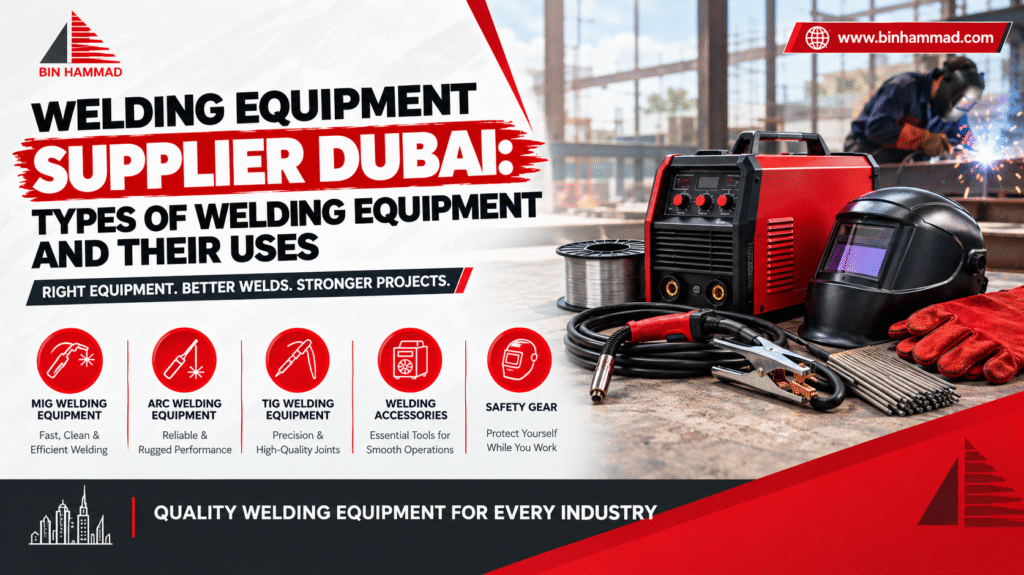
Welding is an important process in construction, metal fabrication, maintenance, and industrial work. The right equipment helps workers complete tasks accurately while maintaining suitable safety practices on the job. Selecting equipment depends on the material, type of welding, working environment, project requirements, and level of protection needed.
For contractors and construction professionals looking for a welding equipment supplier Dubai, understanding the different types of welding equipment and their uses is a practical first step. Welding machines, accessories, and personal protective equipment serve different purposes, so buyers should identify what their projects require before purchasing supplies.
BIN HAMMAD TRADING ENTERPRISES LLC supplies construction materials and safety products for professional applications. Its listed safety range includes welding gloves and other protective items that can be relevant to workplace safety during welding-related activities.
What Is Welding Equipment?
Welding equipment includes the tools, machines, accessories, and protective gear used to join metal components. The equipment required depends on the welding process and the nature of the work.
A typical welding setup may involve a welding machine, an appropriate power source, cables, an electrode holder or torch, and suitable protective equipment. Some applications also require shielding gas, consumables, and tools for preparing or finishing metal surfaces.
Not every project requires the same setup. A workshop carrying out regular fabrication may need different equipment from a construction team performing occasional metal repairs. Identifying the application helps buyers avoid purchasing unsuitable equipment.
Types of Welding Equipment and Their Uses
1. Welding Machines
A welding machine supplies the electrical power needed for a particular welding process. The suitable machine depends on the metal, material thickness, welding technique, and working conditions.
Common welding machine types include:
- MMA or stick welding machines: Used with consumable electrodes and commonly considered for construction, maintenance, and general metalwork.
- MIG welding machines: Feed a wire electrode continuously and are used for various fabrication and production tasks.
- TIG welding machines: Support controlled welding applications where precision and finish are important.
- Multi-process welding machines: Support more than one welding process, depending on the machine’s specifications.
Before purchasing a welding machine, check its process compatibility, power requirements, output range, duty cycle, and suitability for the intended application. Confirm that the machine meets the project’s technical requirements.
2. Welding Electrodes and Consumables
Welding consumables are materials used during particular welding processes. Their type and specifications affect compatibility with the base metal and the required welding procedure.
Examples include stick electrodes and MIG wire. Different consumables are designed for different materials and applications, so buyers should not select them by size or price alone.
Check the manufacturer’s recommendations, material compatibility, required weld properties, and storage instructions. Using the correct consumable helps support a suitable welding process.
3. Welding Torches and Electrode Holders
Torches and electrode holders are components used to deliver or control the welding process, depending on the equipment type.
A torch is used in processes such as MIG and TIG welding, while an electrode holder is associated with stick welding. The component must be compatible with the machine and the selected process.
Before purchasing, verify connection types, current ratings, cable compatibility, and the manufacturer’s instructions. Damaged or incompatible components should not be used.
4. Welding Cables and Connectors
Welding cables carry electrical current between the welding machine and the relevant equipment. Connectors help establish compatible connections within the setup.
Cable selection should account for the machine’s output, cable length, operating conditions, and the manufacturer’s specifications. Connections should be secure, and cables should be checked for damage before use.
Avoid using cables with exposed conductors, damaged insulation, or unsuitable ratings. Correct installation and routine inspection are important parts of electrical safety.
5. Welding Protective Equipment
Personal protective equipment is essential because welding work can expose workers to intense light, heat, sparks, fumes, and other hazards. The specific protection required depends on the process and workplace risk assessment.
Relevant protective items include:
- Welding gloves: Help protect hands from heat, sparks, and contact hazards when the gloves are suitable for the task.
- Welding helmets and appropriate eye protection: Protect the eyes and face from welding radiation, sparks, and particles when correctly selected.
- Protective clothing: Helps reduce exposure to sparks and heat.
- Safety footwear: Helps protect feet from workplace hazards when the footwear is suitable for the working environment.
- Respiratory protection: May be necessary where welding fumes cannot be adequately controlled through other measures.
Ordinary safety spectacles or goggles should not automatically be treated as a replacement for a suitable welding helmet and the correct welding filter. Select protection according to the welding process and applicable safety requirements.
6. Grinding and Metal-Finishing Tools
After welding, metal components may require surface preparation, weld finishing, or removal of excess material. Grinding tools and suitable abrasive products can support these tasks.
The tools used depend on the material, required finish, and workpiece. Accessories must be compatible with the tool and rated for the intended operation. Workers should also use the appropriate eye, face, hand, and hearing protection for the task.
Welding Equipment Comparison Table
| Equipment type | Main purpose | What to check before buying |
| Welding machine | Supplies power for welding | Process, output, power supply, duty cycle |
| Electrodes and wire | Provide consumable welding material | Material compatibility and specifications |
| Torch or electrode holder | Supports the selected welding process | Compatibility, current rating, connections |
| Cables and connectors | Carry current and connect equipment | Cable rating, length, insulation, connectors |
| Welding gloves | Help protect hands during welding | Heat resistance, fit, task suitability |
| Welding helmet and eye protection | Protect eyes and face | Correct filter, coverage, applicable standards |
| Grinding tools | Support surface preparation and finishing | Tool compatibility, abrasive rating, intended use |
This comparison is a general guide. Equipment requirements vary according to the welding process, project specifications, and workplace conditions.
How to Select the Right Welding Equipment
Identify the Welding Application
Start by identifying whether the work involves structural fabrication, maintenance, repairs, workshop production, or another application. The intended task helps determine the suitable welding process and equipment.
Check Material and Thickness
Different metals and material thicknesses may require different welding processes, machine settings, and consumables. Confirm compatibility before purchasing equipment.
Review Technical Specifications
Compare the machine’s power requirements, output range, duty cycle, and compatible accessories. For consumables and connectors, follow the relevant technical specifications rather than relying only on appearance or price.
Prioritise Workplace Safety
Assess hazards such as welding radiation, sparks, hot surfaces, fumes, electrical risks, and grinding particles. Choose appropriate protective equipment and implement suitable workplace controls. Personal protective equipment should complement, not replace, effective hazard controls.
Consider Maintenance and Inspection
Inspect cables, connectors, torches, holders, and protective equipment regularly. Follow the manufacturer’s instructions for cleaning, storage, maintenance, and replacement. Equipment showing damage or faults should be taken out of service until it is safe to use.
Confirm Product Availability
Before placing an order, verify the exact product, specifications, quantity, and availability with the supplier. This is particularly important when a project requires several compatible items or specific technical ratings.
Welding Safety Products Available from BIN HAMMAD TRADING ENTERPRISES LLC
For businesses sourcing protective supplies alongside construction materials, BIN HAMMAD TRADING ENTERPRISES LLC lists a range of safety products on its website. The following products may be relevant to workplace protection, depending on the task and their verified specifications.
- Green Welding Gloves: A product specifically listed as welding gloves. Confirm the glove’s protection rating and suitability for the intended welding process before use.
- Safety Spectacles: Eye-protection equipment for suitable workplace tasks. These should not replace a welding helmet with the correct filter where welding protection is required.
- Safety Goggles: Protective eyewear for applications suited to the product’s design and specifications.
- Safety Shoes: Footwear that may be appropriate for construction and industrial environments, subject to the product’s protective features and the workplace risk assessment.
The safety products category provides a place to review the company’s listed protective supplies. These links identify products on the website; they do not confirm that the company currently stocks every type of welding machine, electrode, or accessory discussed in this guide. Contact the company to confirm product details and availability.
Why Product Suitability Matters When Buying Welding Supplies
A suitable purchase is based on the task, technical requirements, and safety considerations—not just the product name. For example, gloves intended for general handling may not offer the protection needed for welding, and ordinary eye protection may not provide adequate protection against welding radiation.
Buyers should check product descriptions, technical documentation, compatibility, and applicable safety standards before ordering. For projects with specific requirements, consult a qualified welding professional or the equipment manufacturer.
For contractors and businesses in Dubai, BIN HAMMAD TRADING ENTERPRISES LLC offers a website where customers can review listed construction and safety products. Confirm the exact equipment required and its availability directly before finalising a purchase.
Conclusion
Selecting suitable welding equipment requires an understanding of the welding process, the materials involved, the technical specifications, and the hazards associated with the work. Welding machines, consumables, torches, cables, finishing tools, and protective equipment each serve different functions.
Businesses searching for a welding equipment supplier Dubai should compare requirements carefully and verify compatibility before buying. BIN HAMMAD TRADING ENTERPRISES LLC lists welding gloves and other safety products that may support workplace protection when selected for the appropriate application. Checking specifications and confirming availability helps buyers make informed purchasing decisions.
FAQs:
The requirements depend on the welding process. A typical setup may include a compatible welding machine, cables, a torch or electrode holder, suitable consumables, and appropriate protective equipment.
Common types include MMA or stick, MIG, TIG, and multi-process welding machines. Each supports particular welding methods and applications.
Consider the material, thickness, welding process, power supply, output range, duty cycle, and working environment. Check the manufacturer’s specifications before purchasing.
Suitable welding gloves help protect hands from heat, sparks, and other contact hazards. The gloves must be designed for the intended task and used according to their specifications.
Not necessarily. Welding may require a helmet with a correctly rated welding filter and suitable eye and face protection. Ordinary safety spectacles should not be used as a substitute for the required welding protection.
Check the base metal, welding process, consumable specifications, compatibility, and manufacturer’s recommendations. The consumable must be appropriate for the intended application.
Equipment should be inspected before use and maintained at intervals recommended by the manufacturer and workplace procedures. Damaged cables, loose connections, or defective protective equipment should be addressed before work continues.
The website lists green welding gloves, safety spectacles, safety goggles, and safety shoes. Contact the company to confirm current availability, product specifications, and suitability for your requirements.
Depending on the task, protection may include a suitable welding helmet, gloves, protective clothing, safety footwear, and respiratory protection where required. Selection should follow a workplace risk assessment and applicable safety requirements.
Confirm the product specifications, compatibility, quantity, availability, and delivery arrangements. For safety-critical equipment, verify the relevant ratings and documentation before placing an order.
