
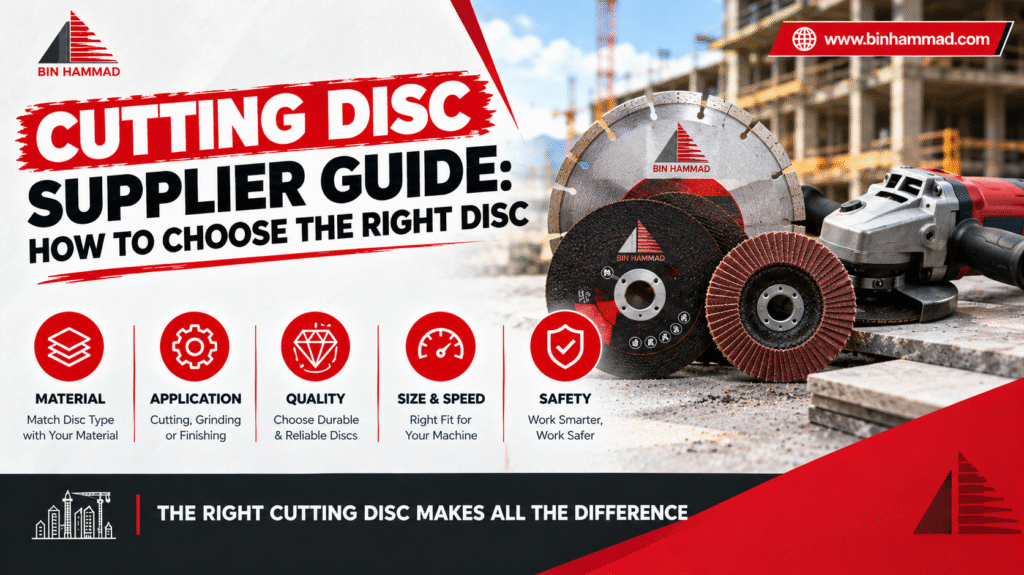
Selecting the right cutting disc is important for achieving accurate cuts, maintaining a consistent workflow, and using cutting equipment appropriately. Different materials and applications require different abrasive products, so buyers should consider the material being cut, the equipment being used, and the requirements of the job before purchasing.
For construction professionals, metalworkers, maintenance teams, and industrial buyers, finding a reliable cutting disc supplier is an important step in sourcing suitable abrasive products. The right selection process helps reduce avoidable interruptions and ensures that the disc matches the intended application.
BIN HAMMAD TRADING ENTERPRISES LLC provides a range of construction and industrial products, including abrasive items listed on its website. This guide explains the key factors to consider when selecting a cutting disc and how to assess the available options for your work requirements.
What Is a Cutting Disc?
A cutting disc is an abrasive accessory used with compatible cutting equipment to cut or separate materials. The correct disc depends on the material, the machine, the required cut, and the manufacturer’s instructions.
Cutting discs are used in various work environments, including construction, fabrication, installation, and maintenance. However, not every disc is suitable for every material. Selecting the right product requires checking its intended application and compatibility with the equipment.
Different Types of Cutting and Abrasive Discs
The type of disc required depends on the task. BIN HAMMAD TRADING ENTERPRISES LLC lists several abrasive products on its website, including cutting, grinding, and sanding options.
1. Cutting Disc
A cutting disc is intended for cutting applications when matched with the appropriate material and compatible equipment. Before purchasing, confirm the disc’s intended use, dimensions, and operating limits from the product specifications.
The website lists a dedicated cutting disc product. Buyers should review its available details to determine whether it matches their requirements.
2. Grinding Disc
Grinding discs are designed for grinding applications rather than being treated as interchangeable with cutting discs. Their suitability depends on the workpiece, the equipment, and the operation being performed.
The grinding disc listed by BIN HAMMAD TRADING ENTERPRISES LLC is a relevant option to review when sourcing abrasive products for grinding tasks.
3. Sanding Disc
Sanding discs are used for sanding and surface preparation tasks. The appropriate product depends on the surface material, the finish required, and the equipment being used.
For jobs involving sanding, buyers can review the website’s sanding disc listing instead of assuming that a cutting disc will perform the same function.
4. Diamond Wheel
A diamond wheel is another abrasive product listed on the website. Its suitability depends on the specific application and the manufacturer’s stated material compatibility. Buyers should check the product details before using it for a particular cutting or abrasive task.
The diamond wheel listing provides another option to consider when reviewing the site’s abrasive product range.
How to Choose the Right Cutting Disc
Selecting a cutting disc involves more than comparing product names or prices. The following factors can help buyers narrow down their options.
Identify the Material
Start by identifying the material you need to cut. Metal, masonry, and other materials can have different cutting requirements. Do not assume that one disc is suitable for every material.
Check the product label and manufacturer specifications to confirm that the disc is designed for the intended workpiece.
Check Equipment Compatibility
A disc must be compatible with the cutting machine on which it will be installed. Check the required disc diameter, bore size, maximum operating speed, and other specifications stated by the manufacturer.
Never fit a disc that does not match the equipment’s requirements. Incorrect compatibility can create serious operating risks.
Consider the Required Cut
Think about the result the job requires. A task involving a narrow cut may have different requirements from one involving repeated cuts or a larger workpiece. Confirm that the selected disc is intended for the required operation rather than relying on appearance alone.
Review Product Specifications
Before placing an order, check the available product information, including:
- Intended material and application
- Disc dimensions and mounting requirements
- Maximum permitted operating speed
- Compatibility with the cutting machine
- Manufacturer instructions and safety warnings
If any specification is unclear, request clarification from the supplier or consult the product manufacturer.
Compare Cost with Suitability
Price is one consideration, but it should not be the only factor. A disc that is unsuitable for the material or machine may not be appropriate for the job, regardless of its price.
Compare products based on their stated application, compatibility, specifications, and suitability for the work being performed.
Cutting Disc Selection Comparison Table
Use this table as a starting point when deciding which type of abrasive product to investigate.
| Product type | Main task | What to check |
| Cutting disc | Cutting materials | Material compatibility, dimensions, and machine speed |
| Grinding disc | Grinding operations | Intended grinding application and equipment compatibility |
| Sanding disc | Sanding and surface preparation | Surface material, required finish, and compatible equipment |
| Diamond wheel | Application depends on product specifications | Approved materials, machine compatibility, and manufacturer instructions |
This comparison describes the general purpose of each product type. Always confirm the intended use of the specific product before purchasing or operating it.
Common Mistakes to Avoid When Buying Cutting Discs
A careful purchasing process can help prevent avoidable product mismatches. Keep the following points in mind:
- Selecting by appearance alone: Similar-looking discs may have different intended applications.
- Ignoring machine specifications: Confirm the disc dimensions and speed rating before use.
- Using one disc for every material: Check that the selected product is approved for the material being worked on.
- Confusing cutting and grinding products: Choose the abrasive accessory according to the task.
- Overlooking safety instructions: Inspect the disc before use and follow the machine and disc manufacturer’s instructions.
- Assuming unlisted features: Confirm specifications, stock, and suitability directly rather than relying on assumptions.
Safety Considerations When Using Cutting Discs
Correct product selection should be accompanied by safe operating practices. Cutting discs can present serious hazards if they are damaged, installed incorrectly, or operated outside their specified limits.
Before use, inspect the disc for visible damage and confirm that it is correctly fitted to compatible equipment. Use the machine’s required guard and appropriate personal protective equipment. Keep the workpiece secure, follow the manufacturer’s operating instructions, and never exceed the disc’s stated maximum speed.
Do not use a disc if its intended application or condition is uncertain. Stop work if unusual vibration, damage, or another sign of unsafe operation occurs, and follow the equipment manufacturer’s guidance.
Buying Abrasive Products from BIN HAMMAD TRADING ENTERPRISES LLC
BIN HAMMAD TRADING ENTERPRISES LLC lists abrasive products alongside its wider range of construction and industrial supplies. Buyers can review the website’s product listings to identify items relevant to their cutting, grinding, or sanding requirements.
When reviewing a product, match the listing against your application and confirm any specifications that are not provided online. For projects requiring multiple abrasive products, distinguish between cutting, grinding, and sanding tasks so each product is selected for its intended purpose.
Before finalising an order, confirm current availability, product specifications, and compatibility with the equipment you plan to use.
Conclusion
Choosing the right cutting disc begins with understanding the material, the required operation, and the specifications of the equipment. Buyers should check compatibility, intended application, operating limits, and safety instructions before making a purchase.
A dependable cutting disc supplier can help buyers identify the relevant product information and clarify requirements where needed. BIN HAMMAD TRADING ENTERPRISES LLC lists cutting discs and other abrasive products that customers can review when sourcing supplies for construction, fabrication, and maintenance tasks.
Taking time to verify the details before ordering can help ensure that the selected product is suitable for the intended job.
FAQs:
Check the material to be cut, the intended application, disc dimensions, mounting requirements, maximum operating speed, and compatibility with your equipment.
No. Disc suitability depends on its design and the material being worked on. Always check the manufacturer’s stated application before use.
A cutting disc is intended for cutting operations, while a grinding disc is intended for grinding. Use each product only for the applications approved by its manufacturer.
Compare the disc’s dimensions, bore size, maximum operating speed, and other requirements with the machine specifications. Do not use a disc that is incompatible with the equipment.
Specifications help buyers verify that a disc is appropriate for the material, equipment, and operation. They also provide important limits for safe use.
A sanding disc is used for sanding and surface preparation. Its suitability depends on the material, the desired surface finish, and the compatible equipment.
Yes, but price should be considered alongside suitability, specifications, compatibility, and the manufacturer’s stated application.
Inspect the disc, fit it correctly, use the required guard and protective equipment, secure the workpiece, and follow all manufacturer instructions. Never exceed the disc’s stated speed limit.
You can review the company’s abrasive category and individual product listings on its website. Confirm the specific product details and current availability before ordering.
Identify the material and cutting task, check your machine’s requirements, and compare these with the manufacturer’s product specifications. Ask the supplier or manufacturer for clarification if any important detail is missing.
