
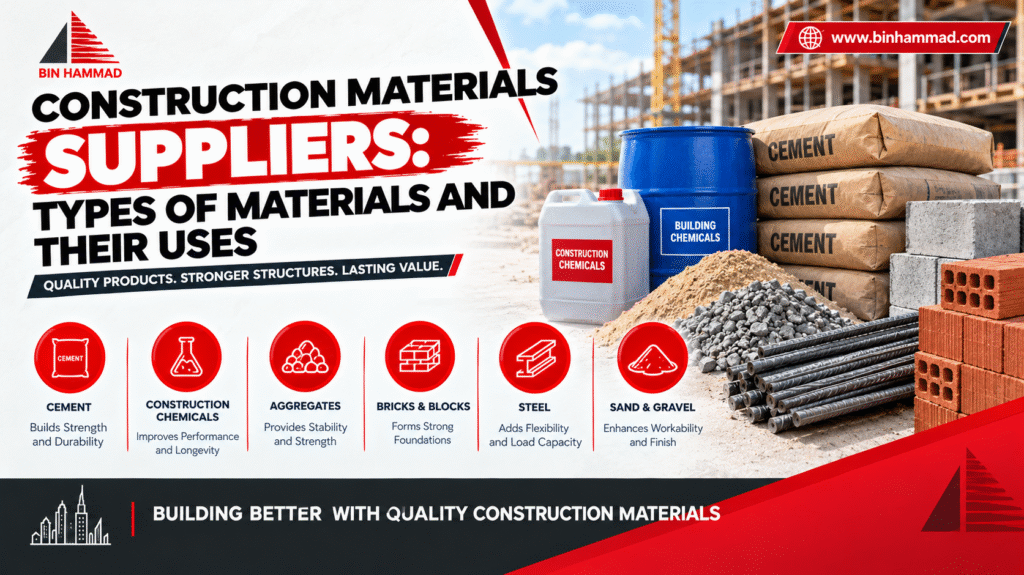
Construction projects depend on the right combination of materials for building, installation, finishing, and maintenance. From cement and concrete blocks to timber, plywood, sealants, and structural components, every material serves a specific purpose. Selecting suitable products at the planning stage helps contractors, builders, and procurement teams align their purchases with project requirements.
When comparing construction materials suppliers, buyers should consider the types of materials available, product specifications, intended applications, dimensions, and compatibility with other building components. Understanding these factors makes it easier to identify suitable products for residential, commercial, and industrial construction work.
BIN HAMMAD TRADING ENTERPRISES LLC lists a range of construction-related products, including cement and construction chemicals, bricks and concrete blocks, structural building materials, and timber and plywood products. Understanding these categories can help buyers narrow down their options according to the work involved.
Different Types of Construction Materials and Their Uses
Construction materials differ in composition, purpose, and application. The following categories cover several common material groups relevant to building and construction projects.
1. Cement and Construction Chemicals
Cement is used in various construction applications, while construction chemicals serve specific purposes related to bonding, sealing, filling, waterproofing, and surface preparation. The correct product depends on the application and the manufacturer’s instructions.
For example, White Cement Unicorn is listed among the company’s cement products. Buyers should review its product information to determine whether it meets their requirements.
Construction chemicals may also include sealants, waterproofing compounds, fillers, and grout-related products. These materials are not interchangeable, so contractors should identify the intended task before selecting a product.
2. Bricks and Concrete Blocks
Bricks and concrete blocks are used in different types of building and wall construction. The suitable option depends on the design, dimensions, application, and project specifications.
Common options listed on the website include solid bricks, hollow blocks, clay blocks, and concrete blocks. Buyers should confirm the dimensions and intended application of each product before ordering.
The choice between bricks and blocks should be based on the project’s construction requirements rather than appearance alone. Where structural performance is important, follow the approved design and relevant technical specifications.
3. Timber and Plywood
Timber and plywood are used in suitable construction, carpentry, and formwork applications. Their suitability depends on the product type, dimensions, treatment, and conditions in which the material will be used.
Plywood options can differ according to their construction and bonding specifications. Treated timber also requires attention to the type of treatment and its intended use.
Before purchasing timber products, confirm the required thickness, length, width, and technical properties. Not every timber or plywood product is suitable for outdoor exposure, structural work, or formwork, so the product documentation should guide the decision.
4. Structural Building Materials
Structural and building components support specific construction and installation requirements. This category can include metal components, reinforcement-related products, lintels, and other building accessories.
Examples listed on the website include reinforcement bars, galvanised steel plates, galvanised U-lintels, and corrugated lintels. Each item has a specific purpose, and the correct selection depends on the project’s drawings, dimensions, and technical requirements.
For components used in structural applications, buyers should confirm material specifications and ensure the product matches the approved design.
5. Sealants and Waterproofing Products
Sealants and waterproofing materials are used for different sealing and moisture-control requirements. The appropriate product depends on the joint, surface, exposure conditions, and intended application.
Silicone sealants and construction sealants should be selected according to the manufacturer’s stated compatibility and use instructions. Waterproofing compounds also require careful review of the application method and surface requirements.
Before ordering, identify the problem the material needs to address and confirm that the product is designed for that purpose.
6. Finishing and Installation Accessories
Finishing and installation products help complete particular stages of construction. Depending on the item, these may support tile installation, plastering, partition work, joint formation, or other finishing tasks.
The website lists products such as tile spacers, plaster stops, partition channels, corner beads, and expansion joints. Buyers should compare dimensions, material type, and installation requirements to determine which products are appropriate for the work.
Construction Materials Comparison Table
The following table summarises common material categories and the main considerations when selecting them.
| Material category | Typical application | What to check |
| Cement | Specified construction and finishing applications | Product type and intended use |
| Construction chemicals | Sealing, filling, bonding, grouting, or waterproofing, depending on the product | Surface compatibility and application instructions |
| Bricks and concrete blocks | Suitable wall and building applications | Dimensions, type, and project specifications |
| Timber and plywood | Carpentry, formwork, and other suitable wood applications | Material type, dimensions, treatment, and exposure conditions |
| Structural components | Specified building and structural applications | Drawings, dimensions, material specifications, and approval requirements |
| Sealants | Suitable joints and sealing applications | Substrate compatibility and movement or exposure requirements |
| Finishing accessories | Tiling, plastering, partitions, and joint finishing | Size, installation method, and compatibility |
This comparison is a general guide. The exact use of each product should be confirmed through its specifications and the requirements of the project.
How to Select the Right Construction Materials
Purchasing materials requires more than comparing product names or prices. A systematic review of project needs can help buyers select appropriate products and avoid ordering materials that do not meet the specifications.
Identify the Project Requirements
Begin by reviewing the construction drawings, specifications, quantities, and stage of work. Materials needed for masonry may differ significantly from those required for waterproofing, formwork, or finishing.
Check Product Specifications
Review dimensions, material composition, grade, compatibility, and intended use wherever this information is available. If a product description does not provide enough technical detail, request clarification from the supplier before purchasing.
Match Materials to the Application
A product designed for one task may not be suitable for another. For example, a sealant intended for a particular joint should not automatically be used for unrelated bonding or waterproofing work. Likewise, timber products should be selected according to their specified applications and exposure conditions.
Confirm Quantities and Dimensions
Calculate the required quantities based on project measurements and the relevant specifications. Check product sizes and packaging information to help coordinate procurement and reduce avoidable ordering errors.
Consider Storage and Handling
Some materials require specific storage conditions or handling procedures. Review the manufacturer’s instructions, especially for chemical products, cement-based materials, timber, and products that may be affected by moisture or environmental exposure.
Confirm Availability Before Ordering
Before finalising a purchase, verify current availability, product details, quantities, and delivery arrangements with the supplier. This is particularly important when several material categories are required for the same project.
Construction Materials Available from BIN HAMMAD TRADING ENTERPRISES LLC
BIN HAMMAD TRADING ENTERPRISES LLC lists a range of products for construction and related applications. Buyers can review the company’s Cement & Construction Chemicals category for products relevant to specified cement, chemical, sealing, and construction requirements.
The website also lists products such as White Cement Unicorn, solid bricks, hollow blocks, timber and plywood options, structural components, and finishing accessories. Each product should be assessed according to its intended application rather than assumed to be suitable for every construction project.
For example, White Cement Unicorn may be worth reviewing when a project requires a cement product with specifications matching the intended use. Contractors working on masonry can also review the listed brick and block products, while buyers requiring wood-based materials can consult the timber and plywood range. For installation and finishing work, relevant accessories should be selected according to their dimensions and compatibility with the planned system.
Before placing an order, confirm the product specifications and current availability with BIN HAMMAD TRADING ENTERPRISES LLC. This helps ensure that the materials selected correspond to the project’s requirements.
Conclusion
Construction projects involve a variety of materials, from cement, bricks, and blocks to timber, plywood, structural components, sealants, and finishing accessories. Each category serves different purposes, and the right selection depends on the design, application, dimensions, and technical requirements of the work.
When evaluating construction materials suppliers, buyers should review the available range, compare product specifications, verify compatibility, and confirm availability before ordering. BIN HAMMAD TRADING ENTERPRISES LLC lists construction-related materials across several categories, providing buyers with products to assess against their building and procurement needs.
FAQs:
Common categories include cement, construction chemicals, bricks, concrete blocks, timber, plywood, structural components, sealants, and finishing accessories. The required materials depend on the project design and stage of construction.
Start with the project specifications and intended application. Check product dimensions, technical details, compatibility, handling requirements, and availability before making a purchase.
Review the available product range, specifications, intended applications, availability, and ability to clarify technical requirements. Confirm the details of the products you plan to purchase before placing an order.
Cement is used in specified construction applications, while construction chemicals may support tasks such as sealing, filling, grouting, bonding, and waterproofing. Each product should be used according to its stated purpose.
Bricks and concrete blocks are different masonry products that may be used in suitable wall and building applications. Their dimensions, material properties, and suitability should be assessed against the project’s specifications.
Timber and plywood can be used in suitable carpentry, formwork, and other construction-related applications. The correct product depends on its specifications, dimensions, treatment, and intended conditions of use.
Specifications help buyers verify whether a product matches the intended application. They can include dimensions, material type, grade, compatibility, and installation or handling requirements.
Identify the joint or surface, the materials involved, and the expected exposure conditions. Then check the manufacturer’s guidance to confirm that the sealant is suitable for that application.
The website lists several categories, including cement and construction chemicals, bricks and concrete blocks, structural building materials, and timbers and plywoods. Buyers can review the relevant category and product pages for further information.
Confirm the product type, technical specifications, dimensions, quantity, intended application, availability, and delivery arrangements. For specialised or structural applications, verify that the product meets the project’s approved specifications.
