
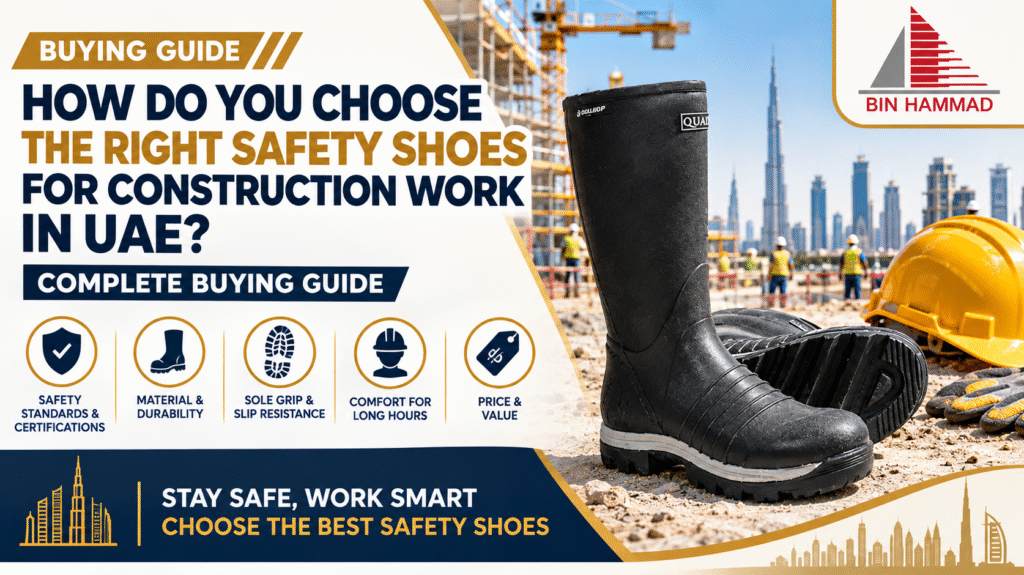
Construction sites in the UAE require workers to deal with heavy materials, uneven surfaces, tools, machinery, dust, and demanding working conditions. Footwear is an important part of personal protective equipment because the right pair can provide protection and support while workers move around the site.
Selecting safety shoes for construction workers in UAE should be based on the hazards of the job, required protection, fit, comfort, and working conditions. Bin Hammad Trading Enterprises supplies safety footwear and other workplace safety products for construction and industrial requirements across the UAE.
Why Are Safety Shoes Important for Construction Work?
Construction workers spend much of their working day standing, walking, lifting materials, and moving between different areas of a project. Their footwear therefore needs to suit the conditions in which they work.
Depending on the model, safety footwear can provide features such as toe protection, slip resistance, ankle support, breathable lining, shock absorption, and durable construction. However, not every safety shoe provides the same combination of features, so the product specification should always be checked before purchase.
Bin Hammad’s safety category includes footwear alongside other PPE products such as helmets, gloves, masks, harnesses, safety belts, and other workplace safety equipment.
What Should You Consider When Choosing Construction Safety Shoes?
1. Toe Protection
Toe protection is an important consideration for construction work where workers may encounter heavy materials or objects that could impact the foot.
Bin Hammad’s safety-shoe range includes footwear with reinforced toe protection. The exact construction and specification can differ between models, so buyers should check the individual product before selecting footwear for a particular task.
2. Slip Resistance
Construction sites can have surfaces affected by dust, moisture, materials, or other substances. Footwear with an appropriate slip-resistant outsole can provide better traction for work environments where grip is important.
The safety footwear listed by Bin Hammad includes models with slip-resistant outsole features. The suitability of the footwear should be assessed according to the actual site conditions.
3. Proper Fit
A safety shoe should fit securely without creating excessive pressure around the foot. Construction workers may wear their footwear for extended working periods, making proper sizing and fit important considerations.
Before purchasing, check the available size and consider the type of socks normally worn during work.
4. Ankle Coverage
The required level of ankle coverage depends on the work environment and the worker’s duties.
Low-cut footwear provides a lower profile, while mid-cut designs extend higher around the ankle. Workers who prefer additional ankle coverage can consider mid-cut safety footwear where appropriate.
5. Breathability and Comfort
Comfort is particularly relevant for workers who spend long periods on their feet. Features such as breathable lining, cushioned insoles, and padded construction can influence how footwear feels during regular use.
The individual product specification should be checked because comfort features vary between models.
6. Closure Type
Safety shoes are available with different closure systems, including laces and zips.
Lace-up safety shoes allow the fit to be adjusted around the foot, while zip safety shoes can provide convenient access when putting on or removing footwear.
The right choice depends on the worker’s preference, required fit, and working routine.
Types of Safety Footwear for Construction Workers
Different footwear designs can be suitable for different work environments.
| Safety Footwear Type | Main Characteristics | Suitable Consideration |
| Low-cut safety shoes | Lower ankle profile | General construction and industrial work |
| Mid-cut safety shoes | Greater ankle coverage | Work where additional ankle coverage is preferred |
| Lace-up safety shoes | Adjustable fastening | Workers who prefer an adjustable fit |
| Zip safety shoes | Convenient zip closure | Workers who prefer quick access |
| Safety boots | Higher boot-style design | Construction and industrial environments requiring boot-style footwear |
The correct option should be selected according to the actual hazards and requirements of the workplace rather than appearance alone.
Safety Shoes vs Safety Boots
Safety shoes and safety boots can both be considered for construction work, but their designs differ.
Low-cut safety shoes can be suitable where a lower ankle profile is preferred. Mid-cut footwear provides greater coverage around the ankle, while safety boots provide a higher boot-style design.
Bin Hammad’s safety range includes Yellow Safety Boots. The product listing identifies features including a steel toe cap, slip-resistant outsole, moisture-wicking lining, cushioned insoles, reinforced stitching, and a bright yellow colour. The exact suitability should be matched with the requirements of the worksite.
Safety Shoe Options Available from Bin Hammad
Bin Hammad’s current product range includes several footwear options suitable for construction and industrial requirements.
Safety Shoes
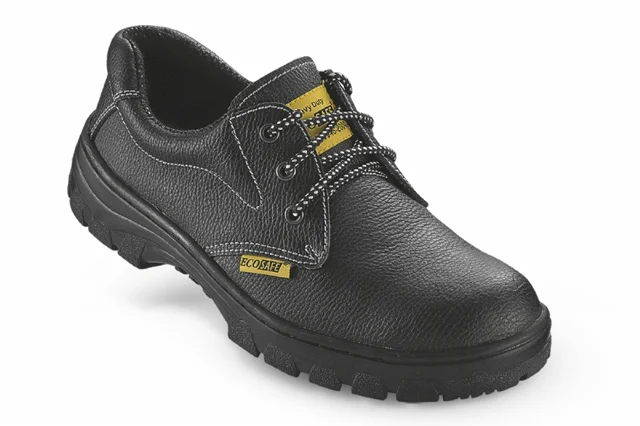
The Safety Shoes product is listed as an industrial safety footwear option. Its product information covers features including toe protection, slip resistance, comfort, breathability, shock absorption, and durable construction.
This type of footwear can be considered for construction and other professional working environments where protective footwear is required.
KINGS KWD806 Shoes Midcut Zip
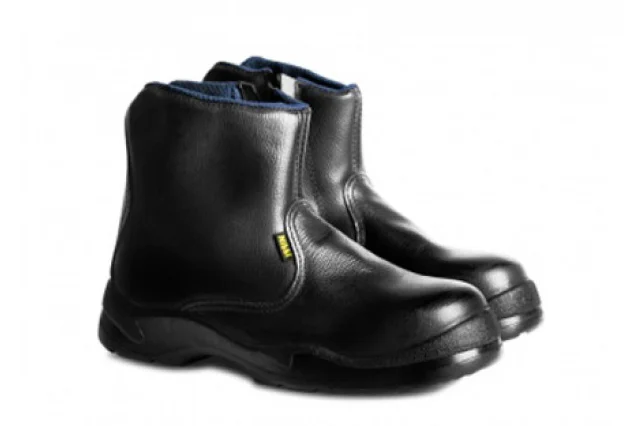
The KINGS KWD806 Shoes Midcut Zip provides a mid-cut design with zip closure.
Its listed features include ankle support, a slip-resistant outsole, reinforced toe protection, and breathable construction. The product is positioned for professional applications including construction-related work.
PHARAOH PH8602W Shoes Mid Cut Lace
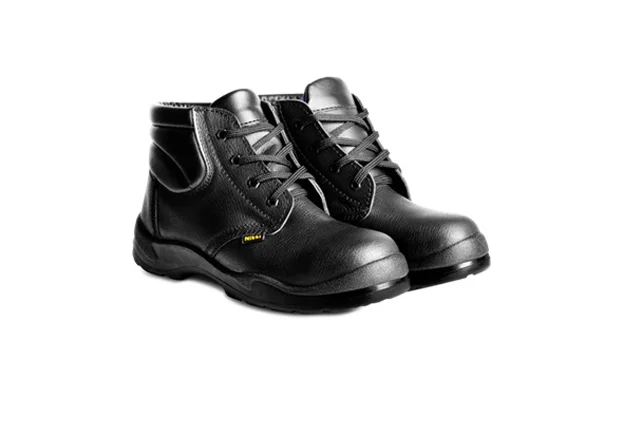
The PHARAOH PH8602W Shoes Mid Cut Lace is another mid-cut option with a lace-up closure.
The product information identifies features such as ankle support, a slip-resistant outsole, breathable lining, and a design intended for demanding professional applications.
Yellow Safety Boots
The Yellow Safety Boots provide a higher boot-style alternative. Their listed features include a steel toe cap, slip-resistant outsole, moisture-wicking lining, cushioned insoles, and reinforced stitching.
This option can be considered when a boot-style safety design is more suitable for the worker’s duties.
How to Choose the Right Safety Shoes for a Construction Site
Step 1: Identify the Workplace Hazards
Start by looking at the actual conditions of the construction site.
Consider whether workers may encounter:
- Heavy or falling materials
- Slippery surfaces
- Uneven ground
- Extended standing or walking
- Dust and construction debris
- Machinery and equipment
- Electrical work
- Indoor or outdoor working areas
The footwear should address the hazards relevant to the specific job.
Step 2: Determine the Required Protection
After identifying the hazards, determine which footwear features are necessary.
For example, toe protection may be important where impact risks exist, while slip-resistant outsoles can be relevant where surface traction is a concern.
Do not assume that every safety shoe provides the same protection. Always check the individual product specification.
Step 3: Select the Right Footwear Design
Decide whether a low-cut shoe, mid-cut shoe, or boot is appropriate.
A low-cut design may suit general work, while a mid-cut shoe can provide greater ankle coverage. A safety boot may be preferred where a higher footwear design is required.
Step 4: Check the Fit and Size
Correct sizing is essential. Workers should have enough room for comfortable movement while ensuring the shoe remains securely positioned on the foot.
For business or contractor purchases, consider the different sizes required across the workforce before placing a larger order.
Step 5: Consider the Working Duration
If workers spend long hours on their feet, comfort-related features become more important.
Look at the product description for features such as cushioning, breathable lining, padded construction, and shock absorption where available.
Step 6: Check the Closure
Choose between lace-up and zip designs according to the required fit and convenience.
Lace-up footwear can provide adjustable fastening, while zip designs can simplify putting on and removing the footwear.
Step 7: Review the Product Specification
Before buying, verify the exact features of the selected model.
Check:
- Toe protection
- Outsole design
- Slip resistance
- Shoe height
- Closure system
- Ankle support
- Breathability
- Cushioning
- Intended application
- Available sizes
Common Mistakes to Avoid When Buying Safety Shoes
Choosing Based Only on Appearance
A shoe may look suitable for construction without providing the features required for the job. Protection and application should remain the main considerations.
Assuming All Safety Shoes Are Identical
Different models can have different designs, closures, heights, and protective features. Compare the product specifications before selecting footwear.
Ignoring the Worksite Surface
The type of surface workers encounter should be considered when evaluating outsole and traction requirements.
Selecting the Wrong Size
An incorrect size can affect comfort and how securely the footwear fits. Check sizing before purchasing.
Buying Without Checking Product Details
Specific features should always be confirmed for the exact product. Avoid assuming that a feature available on one model is included on every safety shoe.
Safety Products for Construction Teams from Bin Hammad
Bin Hammad Trading Enterprises supplies a wider range of safety products in addition to footwear. Its current Safety Products category contains 43 listed products, including black rubber boots, body harnesses, dust masks, ear plugs, fall arrestors, first aid kits, welding gloves, helmets, and other safety equipment.
This wider range can help contractors and businesses source different PPE requirements for construction and industrial workplaces through one supplier.
Why Choose Bin Hammad Trading Enterprises?
Bin Hammad Trading Enterprises was established in 2005 and supplies power tools, hand tools, fasteners, construction equipment, hardware, building materials, welding machines and accessories, safety gear, industrial equipment, and general consumables.
The company operates from Dubai and serves professional requirements across the UAE. Its product range covers several categories, including Safety Products, Structural & Building Materials, Cement & Construction Chemicals, Electrical Products, Timbers & Plywoods, and Packing Supplies.
For construction companies, contractors, maintenance teams, and industrial businesses, this broader product range can support multiple project requirements alongside safety footwear.
Practical Checklist for Buying Construction Safety Shoes
Before purchasing safety footwear, review these points:
- Identify the main hazards at the worksite.
- Determine the required toe protection.
- Check the outsole and traction characteristics.
- Decide between low-cut, mid-cut, and boot-style footwear.
- Compare lace-up and zip closures.
- Check the required ankle coverage.
- Confirm available sizes.
- Consider comfort for extended working periods.
- Review breathability and cushioning features where relevant.
- Check the exact product specification.
- Match the footwear to the actual work environment.
- For larger purchases, confirm product availability and sizing requirements with the supplier.
Conclusion
The right construction safety shoe should match the hazards, working environment, required protection, fit, and daily duties of the worker. Toe protection, slip resistance, ankle coverage, breathability, cushioning, and closure type are useful factors to compare when selecting footwear.
Bin Hammad Trading Enterprises offers different safety-footwear options, including low-cut shoes, mid-cut models, zip and lace-up designs, and safety boots. Its broader safety-product range also includes other PPE and workplace safety products for construction and industrial requirements across the UAE.
Selecting footwear according to the actual job requirements rather than appearance alone helps businesses and workers make a more informed purchasing decision.
FAQs:
Consider the worksite hazards, toe protection, slip resistance, fit, shoe height, ankle coverage, comfort, closure type, and the specific features documented for the footwear.
Safety shoes can be suitable for construction work when their features and protection match the requirements of the particular job and worksite.
Low-cut safety shoes have a lower ankle profile, while mid-cut models extend higher around the ankle and can provide greater ankle coverage.
Steel toe caps can provide protection against certain impact and compression hazards. The required level of toe protection should be determined by the workplace risks and product specification.
The choice depends on the worksite, required coverage, hazards, fit, and worker preference. Bin Hammad offers both shoe-style and boot-style safety footwear.
They can be important where workers encounter surfaces requiring additional traction. Buyers should check the specific outsole characteristics of the selected footwear.
Neither closure is universally suitable for every worker. Lace-up footwear allows adjustment, while zip footwear provides convenient access. The choice depends on fit, preference, and work requirements.
Safety shoes should fit securely while allowing comfortable foot movement. Workers should check the available sizing and consider the socks they normally wear during work.
Yes. Bin Hammad’s Safety Products category includes Black Rubber Boots and other safety footwear, and the supplied product range also includes Yellow Safety Boots.
Yes. Its Safety Products category includes products such as helmets, harnesses, fall arrestors, dust masks, gloves, ear plugs, first aid kits, and other workplace safety products.
